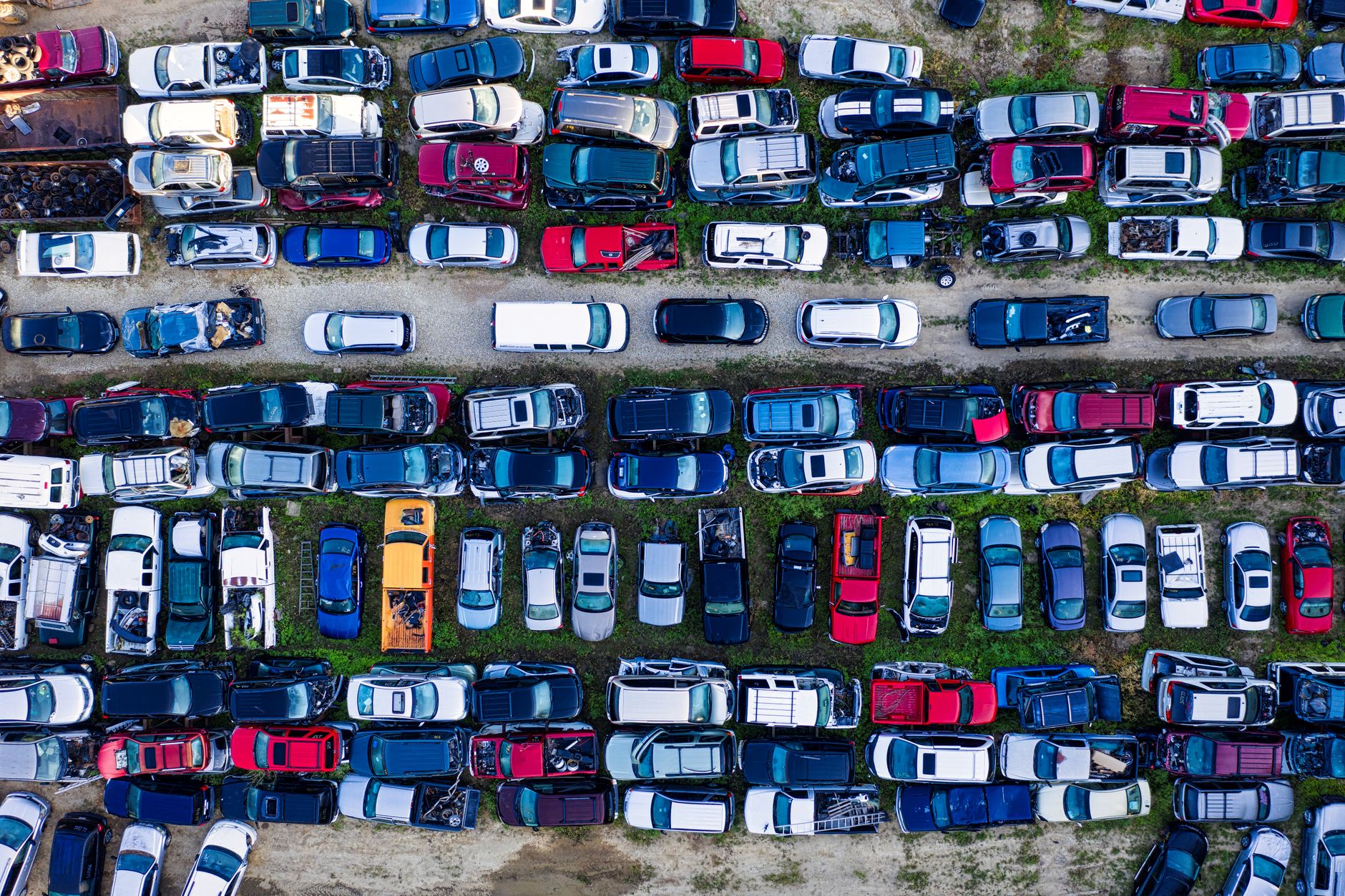
The Behavior
The most telling behaviors of 2026 are not purchases. They are refusals and improvisations.
In Thailand, owners of a brand whose service network shrank from sixty-six outlets to roughly forty began repairing their own cars, knowing that an independent workshop can void a warranty they still hold on paper. Some authorized repairs took ten months. In China, an estimated eight in ten used-car dealers now decline to take in a battery-electric vehicle more than five years old — the trade stopped accepting the product, which is a harder signal than any price. In Mexico City, an owner went to file a routine exemption sticker and was asked for a letter of electrical fitness from a dealership that no longer exists; the car works and the file does not.
And in Addis Ababa, where importing a combustion vehicle has been illegal since January 2024 and the ban was extended to trucks in October 2025, some owners are giving up on electric and going back. A 2007 Toyota Corolla changed hands for the equivalent of twenty thousand dollars, taxes included. A car nobody may import has become an asset that appreciates.
Four continents, four different actions, one shared premise: the vehicle is fine and something behind it is not.
The System
The mechanism is not degradation. A fleet lessor measured twenty-four thousand state-of-health certificates across roughly eleven European countries for cars sold between March 2023 and September 2025: after seventy thousand kilometres the pack retains an average of ninety-three per cent of its capacity, and after six years it stays above ninety. Degradation runs at roughly one per cent every twenty-five thousand kilometres. Slow, gradual, predictable.
Set that against the price. In five large European markets, resale value retention for battery-electric cars fell from a peak near fifty per cent in 2022 to thirty-five per cent in 2025, while the market as a whole slipped from about sixty to fifty. In China, three-year retention sat near forty-six per cent in 2024 and average resale for battery and plug-in hybrids reached forty-two by the end of 2025.
Both facts cannot follow the same curve. The asset degrades at one per cent per twenty-five thousand kilometres; the price degrades to a third. The gap is not physical — it is informational. And it has a second cause that has to be said out loud: with a price war running, the used car competes against a new car that keeps getting cheaper, and in that fight the health of the pack is irrelevant.
Where the physical constraint is real, it is not the battery either. It is the supply chain for large parts. Battery modules, electric motors and power electronics are not immediately available in Colombia. In Thailand they arrived late or not at all. In Ethiopia they come from China and cost accordingly. That is the bottleneck, and it is logistical, not chemical.
The Power
Who holds the signature is the question of the year.
Every one of these states regulated the vehicle's entry. None regulated the guarantor's permanence. Mexico has no rule obliging brands or importers to guarantee parts, service or documentary support for a minimum period; the responsibility sits with each importer, and when the importer leaves, the burden lands entirely on the buyer. Yet a mobility authority still requires a certificate that only the manufacturer can issue. The state delegated certification to a private party and did not require that party to stay.
Two corrections are now in motion, from opposite directions. Thailand's consumer-protection board opened inspections in Bangkok and nearby provinces with specific attention to how battery performance is disclosed and what the battery warranty actually says, and a bill that would force buy-back or replacement of a defective vehicle passed first reading in June by four hundred and twenty votes to none. Europe goes the documentary route: from late November 2026 its new emissions framework introduces battery durability requirements for newly type-approved cars, mandatory display of the pack's condition on the vehicle's identity record, and a battery passport carrying its history and certified capacity.
One route makes the seller responsible. The other makes the object legible. Neither touches the price.
The Horizon
The market is about to split into two populations, and the line will not be drawn by technology.
On one side, the vehicle that can prove itself: certified pack condition, a passport, an obliged guarantor, a certified workshop. On the other, the vehicle that cannot — not because it is worse, but because it was sold before anyone was required to document it. Suspicion stops being an opinion and becomes the absence of a document. Fleets have an obvious incentive to move their undocumented stock out before the comparison exists.
The second movement is geographic. If most used-car traders in the largest electric market on earth will not take a five-year-old vehicle, that fleet leaves. It goes to markets with no service network and no aftersales obligation — which is precisely where the orphanhood already visible in Mexico and Thailand comes from. The problem does not resolve. It relocates.
The third is quieter and concerns the workshop. In three of these territories the independent shop stopped being the enemy of the warranty and became the only real service network. Someone will have to certify it for high voltage, and whoever does will hold more power over residual value than any manufacturer.
The Street
At street level the question is not whether the electric car is good. It is who answers the phone.
In a country where only twelve per cent of more than twenty-one million registered vehicles carry insurance beyond the mandatory minimum, and where a single part is worth between thirty and fifty per cent of the car, a total loss is not an insurer's problem. It is a household's. The remaining eighty-eight per cent have nobody to hand the invoice to. And there is no public figure for premiums or claims specific to electric vehicles there — the segment is too new. Nobody knows what the risk costs, and it is being sold anyway.
That is why the combustion car looks like it lasts longer. Not because its mechanics are superior. Because its support network does not depend on a company staying alive: anyone repairs it, anyone resells it, no permit asks for a manufacturer's signature. What buyers call durability is institutional independence.
In Addis Ababa that independence has a market price, and it is twenty thousand dollars for a nineteen-year-old sedan. Everywhere else it is still free, and that is the only reason the comparison feels unfair.
A Digest does not report on its own: it crosses already-verified signals. These are, with their own index and their own sources.