The Signal
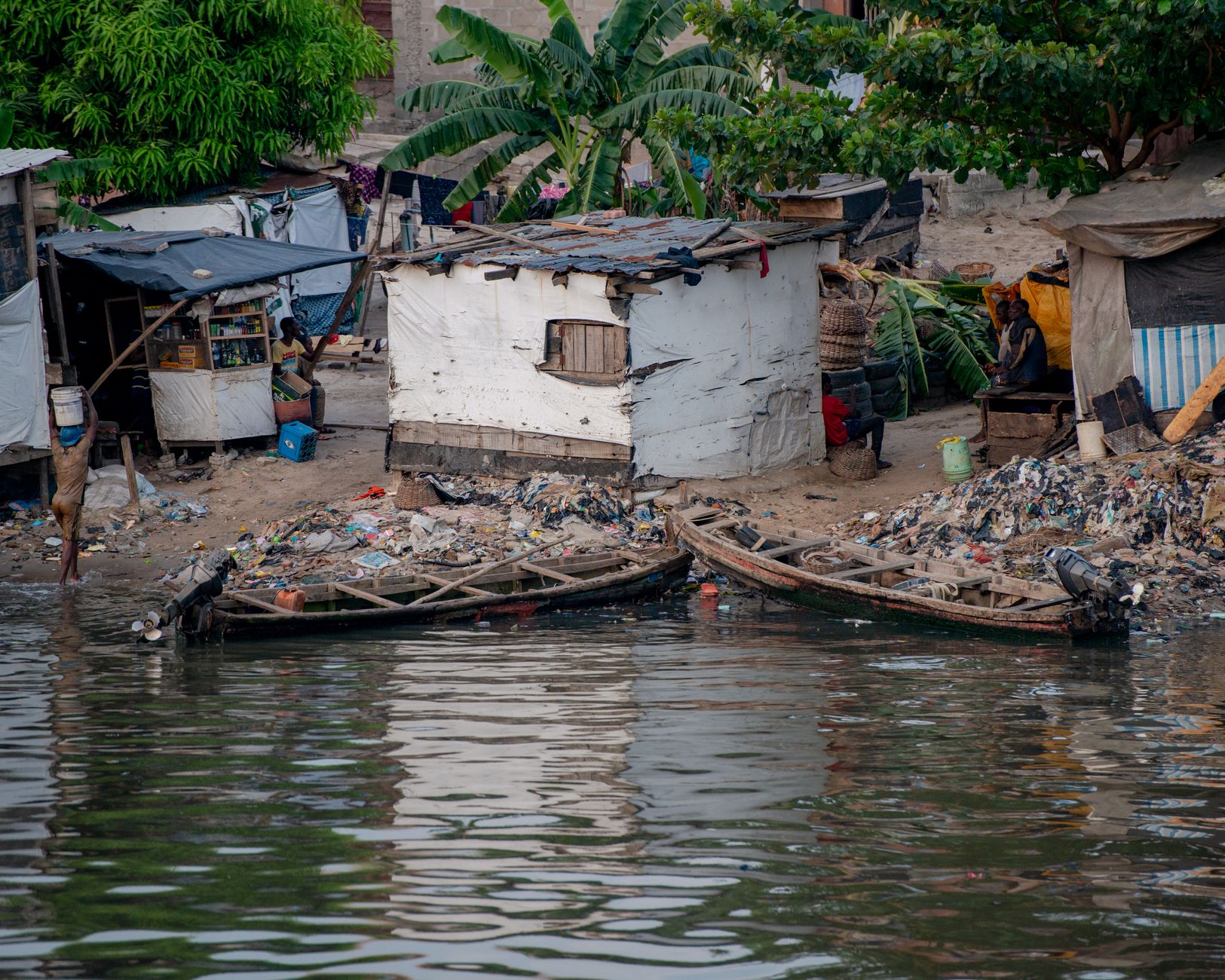
Between December 23, 2025 and the first days of January 2026, Lagos State demolished the stilt-house communities of Makoko and Sogunro, on the Lagos lagoon in Nigeria, under the figure of a “safety setback” from high-tension power lines. The number of displaced people falls between 10,000 and 40,000, with as many as 80,000 at risk. The protests of January 4 and 5 were dispersed with tear gas. In February 2026, UN experts (OHCHR) characterized the operation as a potential “domicide” and a possible crime against humanity.
The figure that orders everything else is not the body count but the arithmetic of the clearing. The invoked safety margin escalated from 30 to 50 meters, then to 100, and finally to more than 200 meters, freeing far more land than any technical electrical-safety standard requires.
The number that escalates protects no one from the cables. It measures something else.
The Context
The cleared parcel — 54.58 hectares — coincides with a luxury real estate joint venture signed in 2021, the FBT Coral Estate, split 75% to the developer and 25% to Lagos State. The confirmation does not come from a leak: Lagos State’s own official account on X published the split. It is the smoking gun. The vocabulary of safety and the geometry of the setback protected no one from the cables; they delineated the exact perimeter of a real estate asset.
There is a legal aggravating factor. A Federal Court (case FHC/L/CS/70/2025) had already halted the demolition and awarded 3.5 billion naira in damages in August 2025. The State demolished anyway: open contempt of court. The government offers its counter-voice — Commissioner Gbenga Omotoso argued that “no responsible government allows people to live under high-tension cables” — but the safety alibi does not explain why the margin grew to quadruple itself, nor why the freed land aligns with a 2021 contract.
The Reading
What we observe here is not an improvised demolition, but the operation of a device. Risk — “safety,” “setback,” “high tension” — functions as a legal grammar of expropriation: a technical language that turns into an administrative matter what is, at bottom, a transfer of land from the poor to a luxury consortium. The escalating number (30→200 m) is the fingerprint of the mechanism: the safety standard is elastic precisely because its real function is not safety.
That’s the mechanism. Read it again: safety is the language, not the motive.
What comes next is the normalization of the procedure. When a State can ignore a binding ruling and an already-awarded indemnity, the cost of expropriation collapses and the model becomes replicable. Reports — not yet independently confirmed — attribute infant deaths to tear-gas exposure; the fact that they circulate at all signals the degree of violence the device is capable of absorbing without stopping.
The Pattern
Makoko is not an isolated episode, but the second iteration of an already-seen pattern. In 2016, the eviction of Otodo Gbame expelled some 30,000 people from the same lagoon, with the same script: valuable coastal land, an informal population, a justification of public order or safety. What changes in 2025-2026 is the refinement of the alibi: no longer “cleanup” or “order,” but the technical precision of the electrical setback, a metric that feigns engineering neutrality.
The signal connects to a broader global phenomenon: coastal urbanism as a frontier of accumulation, where climate change, real estate pressure, and the legal informality of settlements converge so that the most exposed land becomes, paradoxically, the most coveted. The vocabulary varies — resilience, safety, renewal — but the operation is the same.
Turning an argument for protection into a title of ownership: that is the frontier advancing.
Each link supports a numeric claim in this piece. Open to check.
- UN experts (OHCHR, Feb 2026): the demolitions 'can constitute domicide, which is a crime against humanity' — over 40,000 displaced in Makoko TIER A
- The same OHCHR release, republished in full and readable without a bot challenge: the 30-metre power-line margin, the tear gas, the 40,000 TIER B
- OHCHR, March 2025: Nigeria must urgently halt the demolitions of Lagos waterfront communities — the precedent a year earlier TIER A
- Rights coalition calls on Lagos to halt the Makoko demolitions (Businessday NG) TIER B